
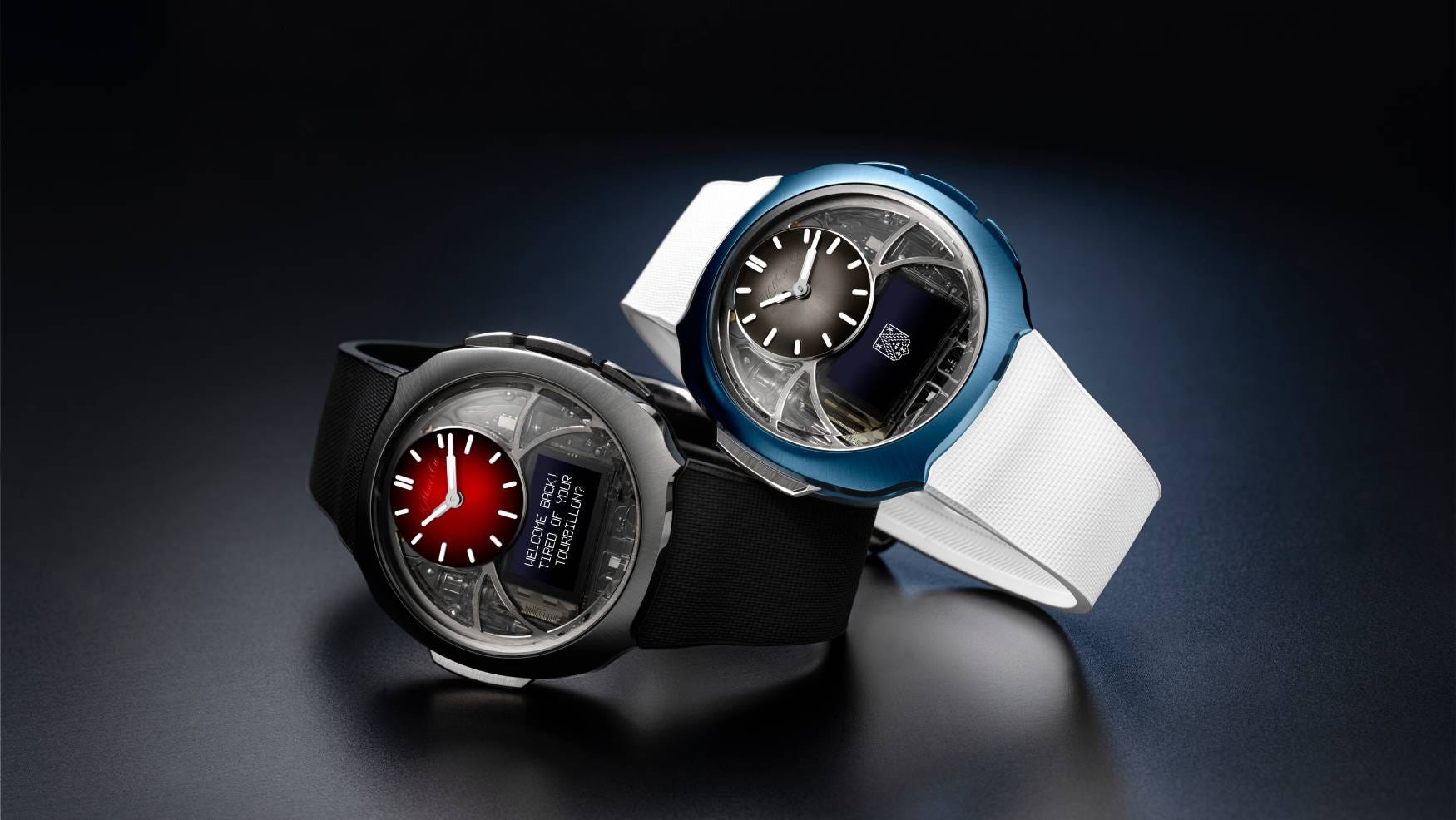
There’s a particular kind of whiplash that comes from seeing the words “H. Moser & Cie.” and “under CHF 4,000” in the same sentence. This is, after all, a manufacturer whose motto is literally “Very Rare,” whose entry point traditionally sits deep in five-figure territory. So when the brand unveiled the Off-Grid this week, the watch world was in shock — not because it’s radical in concept, but because it’s radical in accessibility.
The Off-Grid is Moser’s second foray into digital timekeeping, following last year’s Streamliner Alpine Mechanics Edition built for real-time Formula 1 pit communications. Where that watch was a connected tool for the track, the Off-Grid strips away the racing telemetry and repositions the same split-level architecture for everyday life — a skeletonised dial revealing a digital display beneath a small, domed analog face above it.
A Familiar Shape, A New Purpose
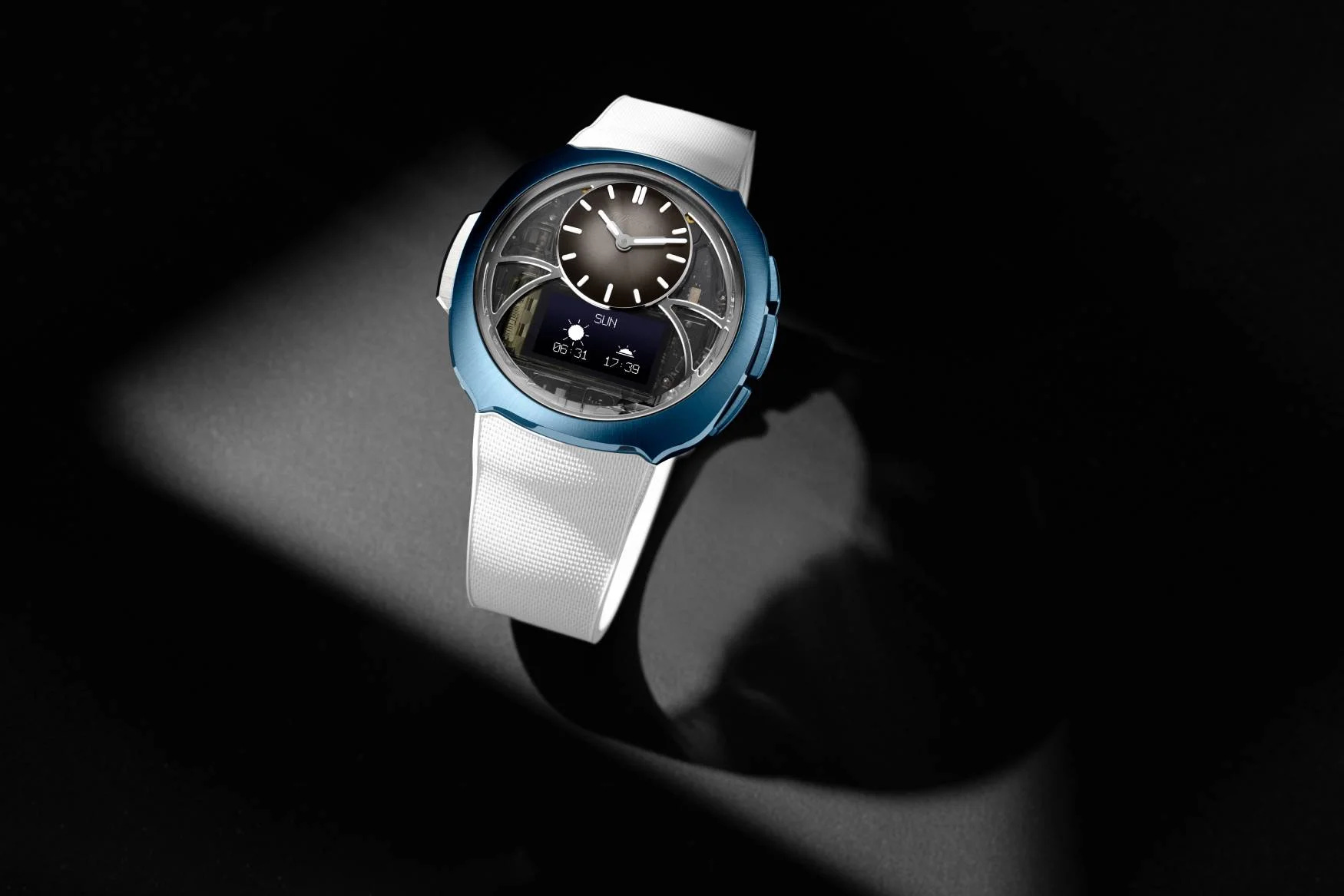
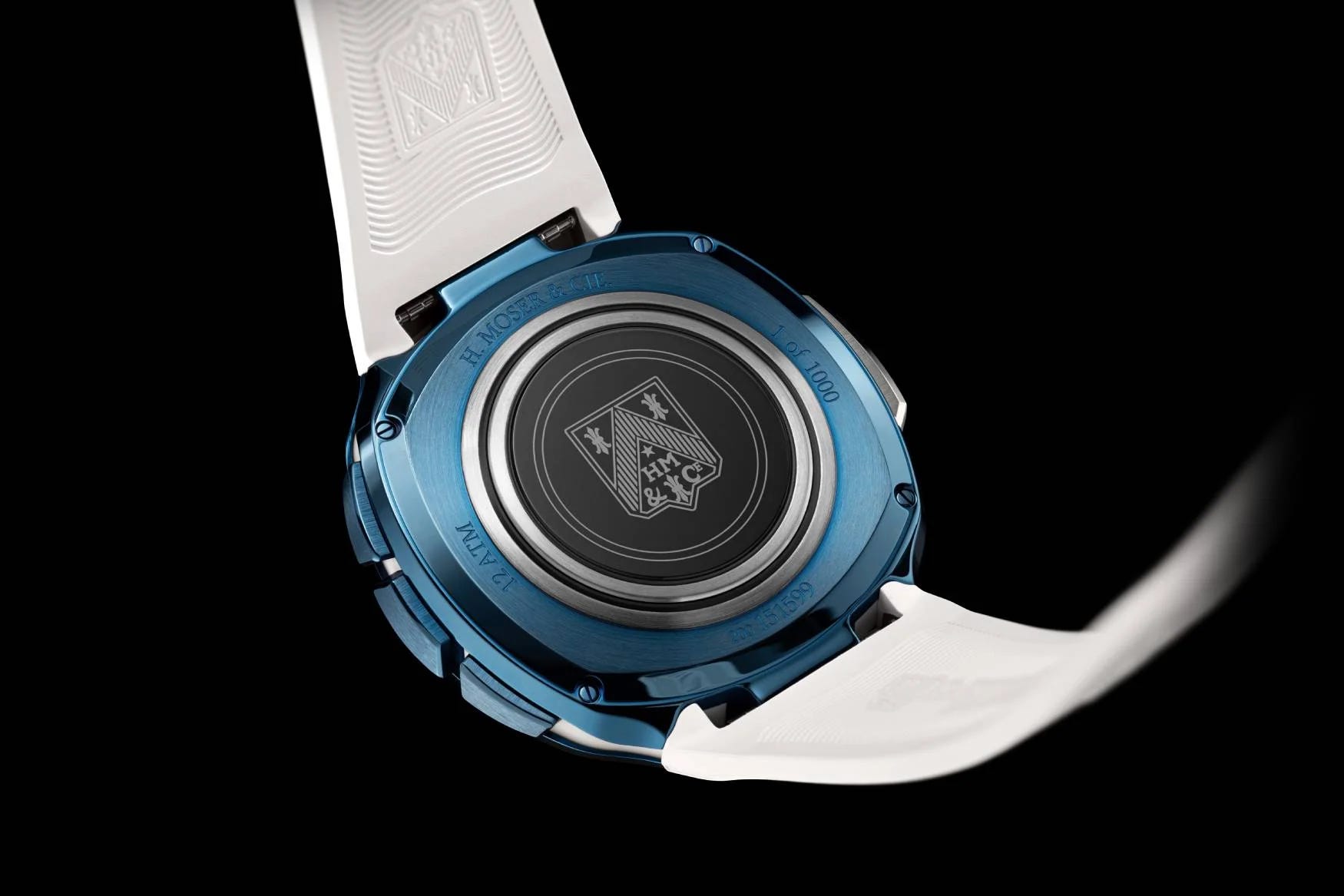
Housed in the 42.6mm Streamliner case, the Off-Grid arrives in two colorways: a black composite-and-steel version with a red fumé dial and black rubber strap, and a blue edition paired with a black fumé dial and white strap. Both are rated to 12 ATM and built with Moser’s signature fully integrated bracelet-and-case silhouette, so despite the tech underneath, nothing about the wrist presence reads as a gadget.
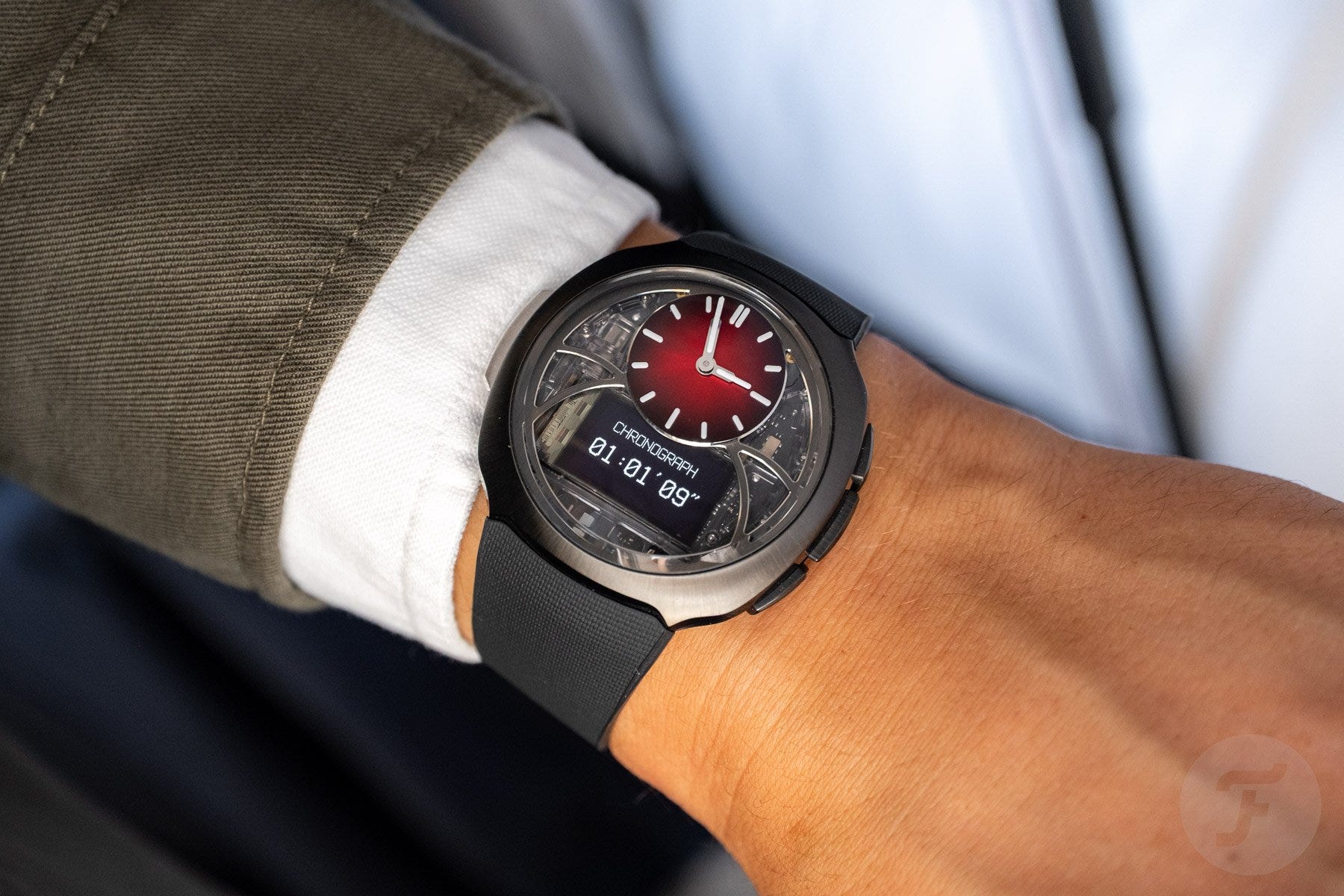
That’s very much the point. Moser calls the concept “Off-Grid mode” — quick country selection, a GMT function covering every time zone, a split-seconds chronograph accurate to 1/100th of a second, a perpetual calendar, and a perpetual moon phase. There’s also a small, charmingly analog touch for a digital watch: a built-in dictionary of ten essential words across 21 languages, tied to whichever city you’ve selected. No apps, no notifications — just functions a traveling watch enthusiast might actually reach for.


Inside: The Calibre D10
The engineering story is arguably the bigger news. The Off-Grid runs on the Calibre D10, co-developed with Swiss smartwatch specialist SEQUENT — an unusual but logical partnership for a brand that has spent two decades insisting on doing things in-house. The payoff is power reserve numbers that read more like an e-ink display than a watch movement: up to 12 months in time-only mode, or roughly six months with regular use of the alarm and chronograph functions. It’s a rare case of a “smart” complication actually reducing the owner’s maintenance anxiety rather than adding to it.
Getting One
Availability follows Moser’s usual scarcity playbook, just at a different price tier. Each colorway is limited to 1,000 pieces, for 2,000 total. Existing clients get first access from September 21 to 23, 2026, before the Off-Grid opens to the wider Moser community on September 24 — with the entire run closing out by October 5. Pricing starts at CHF 3,900 excluding VAT, sold exclusively through Moser boutiques and its own website.
The Bigger Bet Behind a Small Watch
The Off-Grid forces an interesting question onto a brand built around exclusivity: can “Very Rare” survive contact with a genuinely attainable price point? Judging by the reception so far, the answer looks like yes — because the rarity Moser sells was never really about the number on the price tag. It’s about the attitude, the fumé dials, the refusal to make anything ordinary. If the Off-Grid succeeds, don’t be surprised if digital-mechanical hybrids stop being a novelty for independent watchmaking and start being a genuine new category.