

Rolex has done something it rarely does. It has taken a collector’s nickname and turned it into an official model name. Meet the Perpetual Padellone.
Unveiled in Milan on 15 September 2026, the Padellone is a 39mm complete calendar with a moonphase. It’s the second model in the Perpetual collection, which launched with the time-only 1908 in 2023. It’s also the most complicated watch Rolex has released since the Sky-Dweller in 2012.


Where Does the Name Come From?
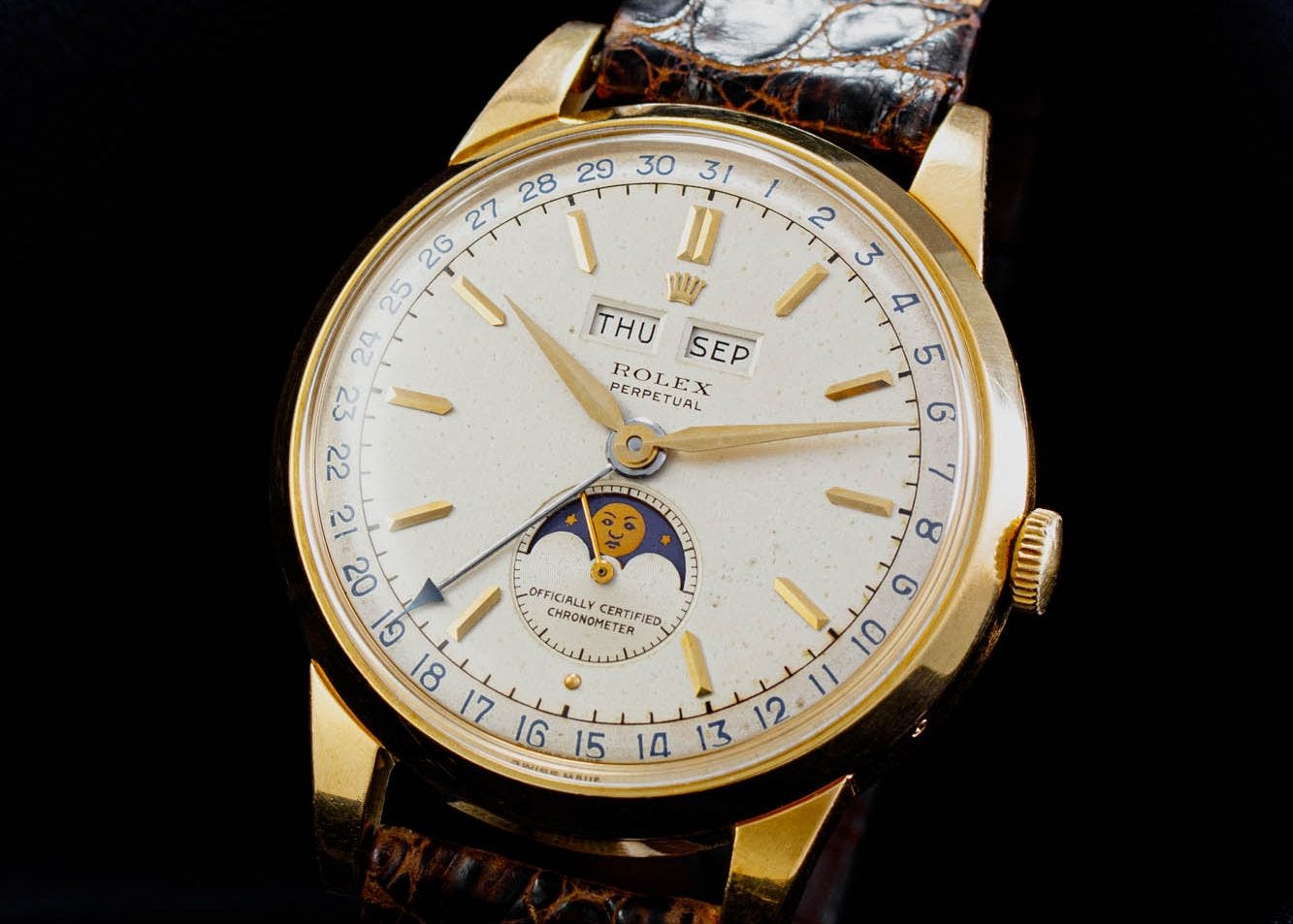
“Padellone” means big frying pan in Italian. Dealers coined the nickname decades ago for ref. 8171, a 38mm triple calendar with moonphase built from 1949 to 1953. Its broad, flat case reminded collectors of kitchenware. Good examples now sell for well into six figures.
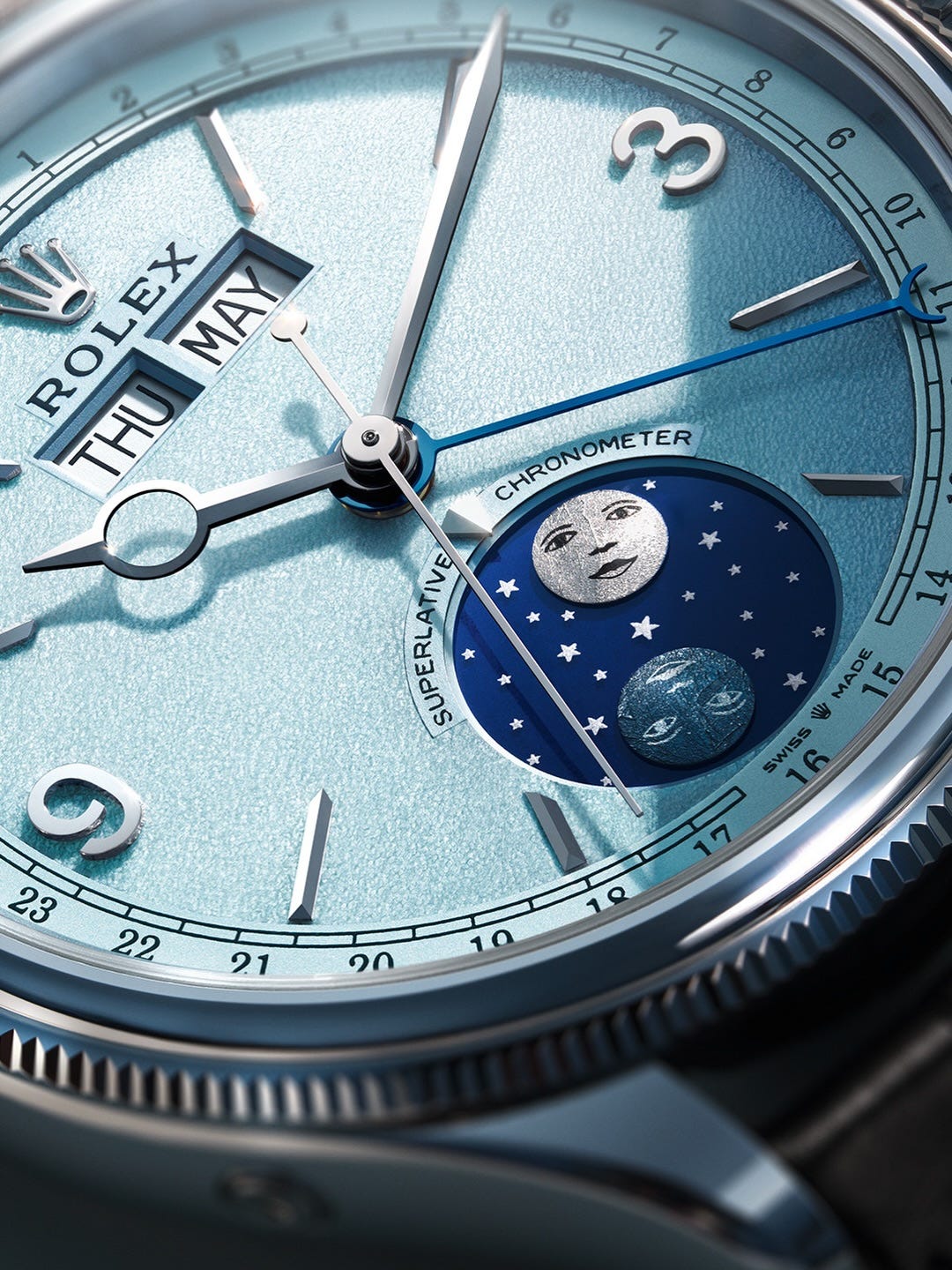
The new watch borrows the 8171’s layout. Day and month sit in twin apertures at 12 o’clock. A blue date hand with a crescent moon at its tip reads against a track at the dial’s edge. The one real departure from the original: applied numerals at 3 and 9.
Not a Perpetual Calendar — On Purpose
Despite the name, this isn’t a perpetual calendar. “Perpetual” refers to the collection, and to Rolex’s self-winding rotor from 1931. The Padellone is a complete calendar with an annual mechanism behind it.
That’s a deliberate choice. A true perpetual calendar tracks every month’s length, leap years included. But it only stays accurate while running — leave it in a drawer, and you’re stuck resetting a fiddly sequence of recessed pushers. Rolex clearly decided that complexity wasn’t worth the trade-off.
Meet the Haplos System
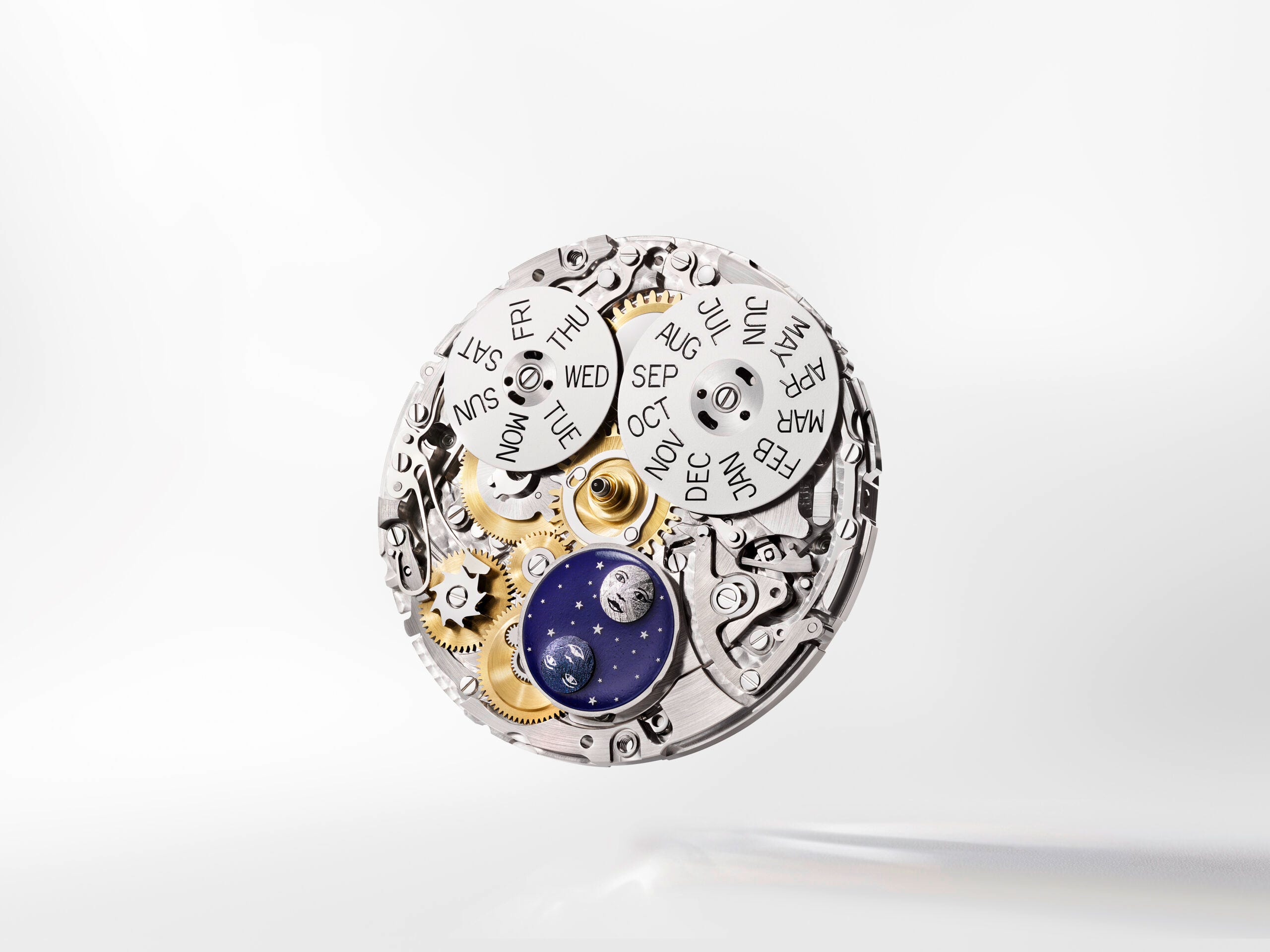
Instead, Rolex built calibre 7190 around a new patented mechanism called Haplos. It teaches the movement the difference between 30- and 31-day months, using just two extra components. The pattern is cut directly into the back of the month disc.
The result: the watch needs just one correction a year, at the end of February. And at midnight, day, date and month all jump together, instantly.
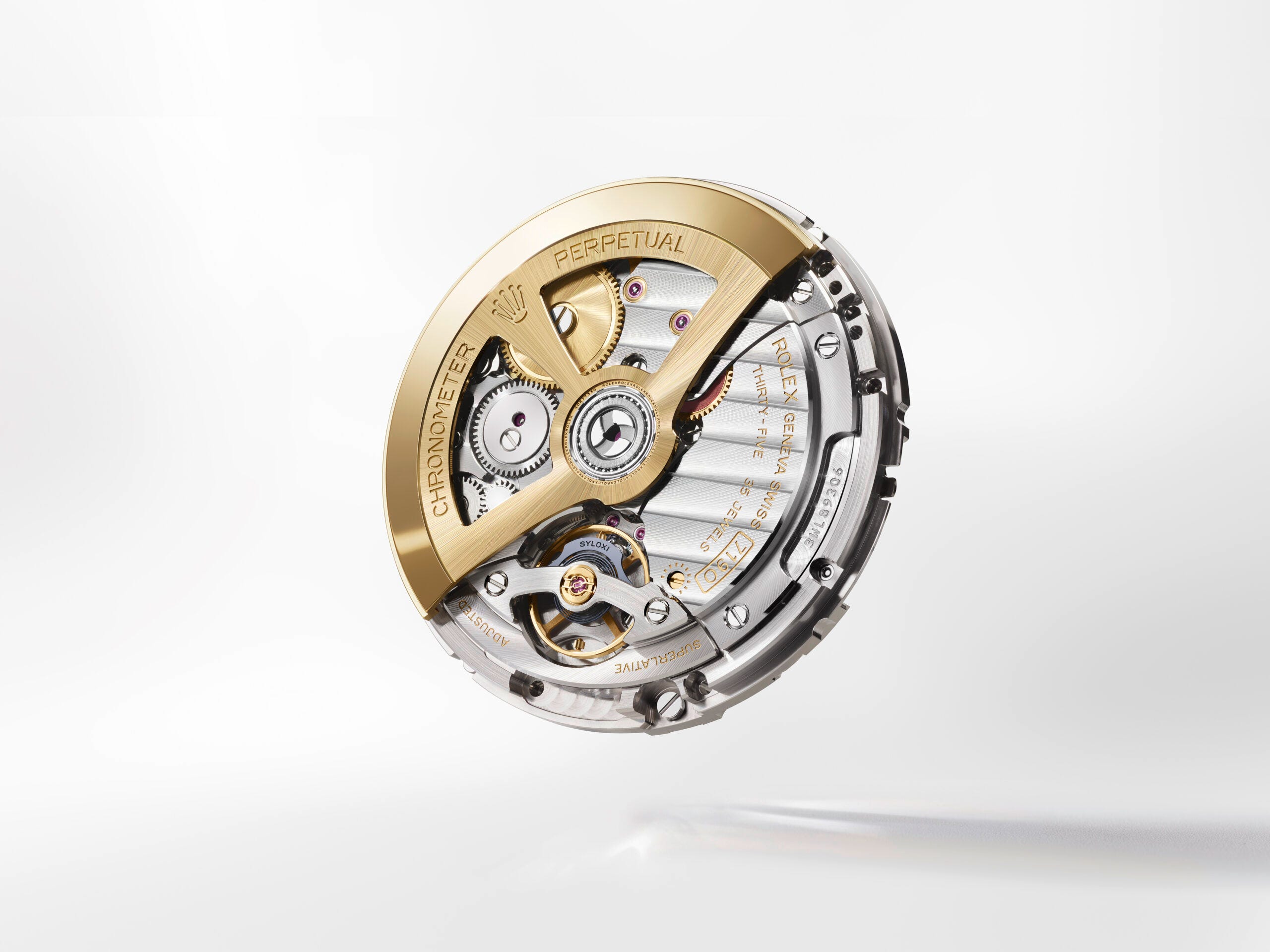
Design and Specs
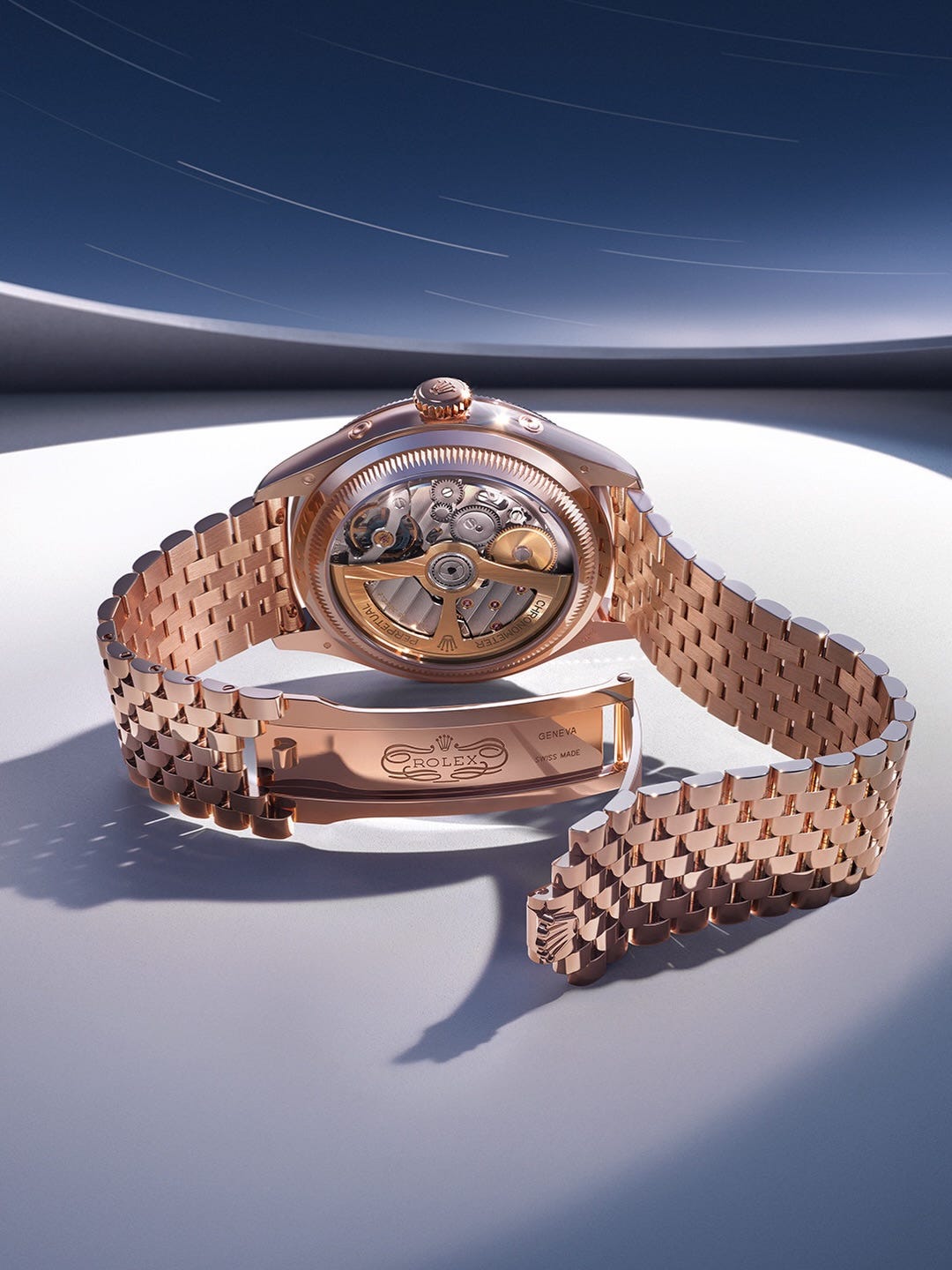
The moonphase breaks convention. Instead of a small aperture, a fully visible blue enamel disc rotates once every lunar month. Both the full moon and new moon are cut from meteorite, each with a pad-printed face — a nod to the original 8171’s starry dial. Powering it all is calibre 7190, an evolution of the 7135 found in last year’s Land-Dweller. It runs at a rare 5Hz, using Rolex’s Dynapulse silicon escapement and a Syloxi hairspring, with a 66-hour power reserve and 30 patent applications behind it. The 39mm case follows the 1908’s design language: a domed, fluted bezel and a grained dial. At 12.2mm thick with 50m water resistance, this is a dress watch through and through — no screw-down crown, no Oyster case.
It comes in two metals:
18ct Everose gold, alligator strap — CHF 52,500
18ct Everose gold, Settimo bracelet — CHF 64,800
950 platinum, alligator strap — CHF 59,000


It’s a regular production model, not limited — though waiting lists are expected.
Fewer complications, smarter engineering. Sometimes that’s the bigger flex.