
Most watch brands start with a case designer and a spreadsheet. NO IDENTITY started with paint, glue, and a stack of cardboard. There was no factory on day one, no investor deck, no five-year roadmap — just an artist named LABEG, treating luxury watch design as raw material for something looser and funnier than anything sitting behind a boutique counter. What began as a personal creative outlet has since turned into a brand collectors are actually wearing, and the path between those two points says something about where watch culture is headed.
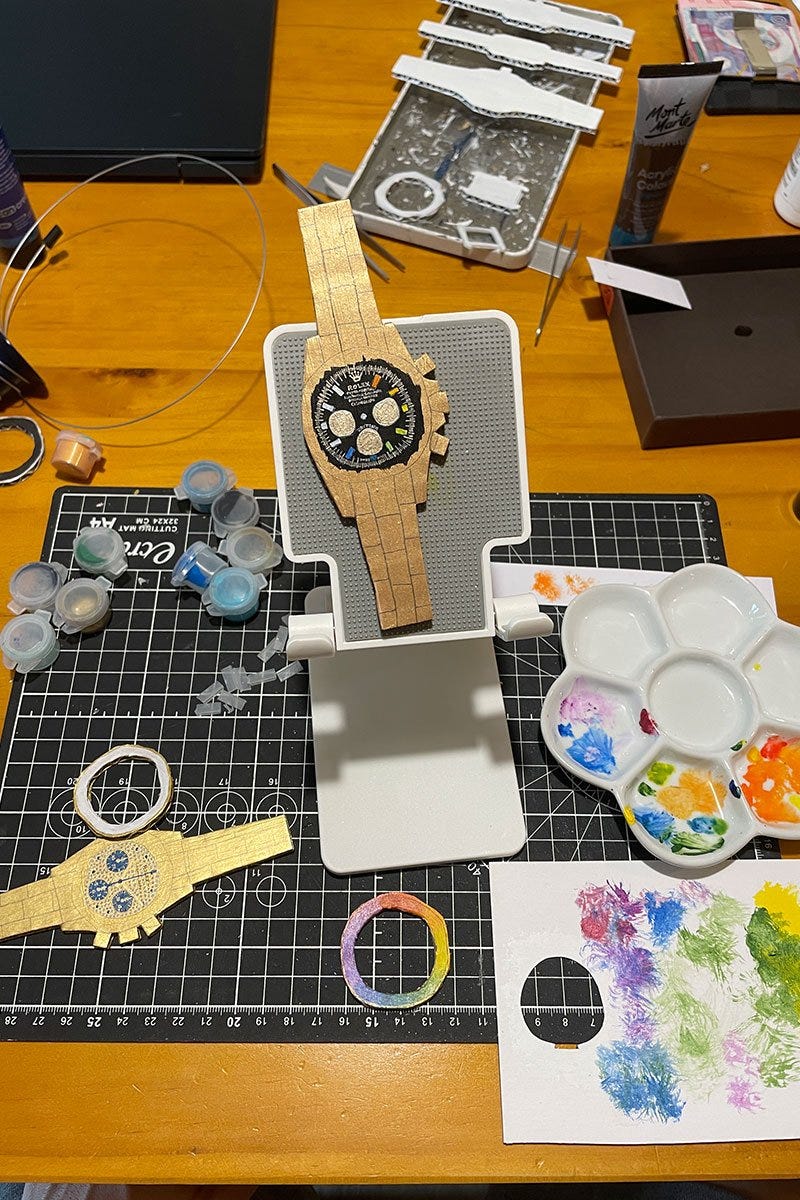
Paint Before Steel
LABEG’s earliest pieces weren’t watches in any functional sense. They were cardboard, cut and painted into whimsical, oversized takes on the kind of luxury timepieces most people only see in glass cases — reimagined with a cartoonish, almost mischievous energy that had nothing to do with precision engineering and everything to do with how a watch feels when you strip away the seriousness. There was no plan to sell anything. It was art, made because making it was fun.


When the Art World Started Watching
The pieces didn’t stay in a sketchbook for long. Coverage rolled in from the New York Times, Hypebeast, Hodinkee, and Revolution — publications that built their reputations writing about six-figure manufacture movements, suddenly writing about art built from a box. That attention eventually led somewhere no one could have scripted: a collaboration with H. Moser & Cie, the independent Swiss manufacture known for its own irreverent streak, which handed LABEG its Hong Kong boutique for a cardboard-watch exhibition. It was an odd pairing on paper — a heritage watchmaker platforming an artist working in packaging material — and that oddness is precisely why it worked. The watch world wasn’t just noticing LABEG anymore. It was vouching for him.
From Painted Case to Real Case
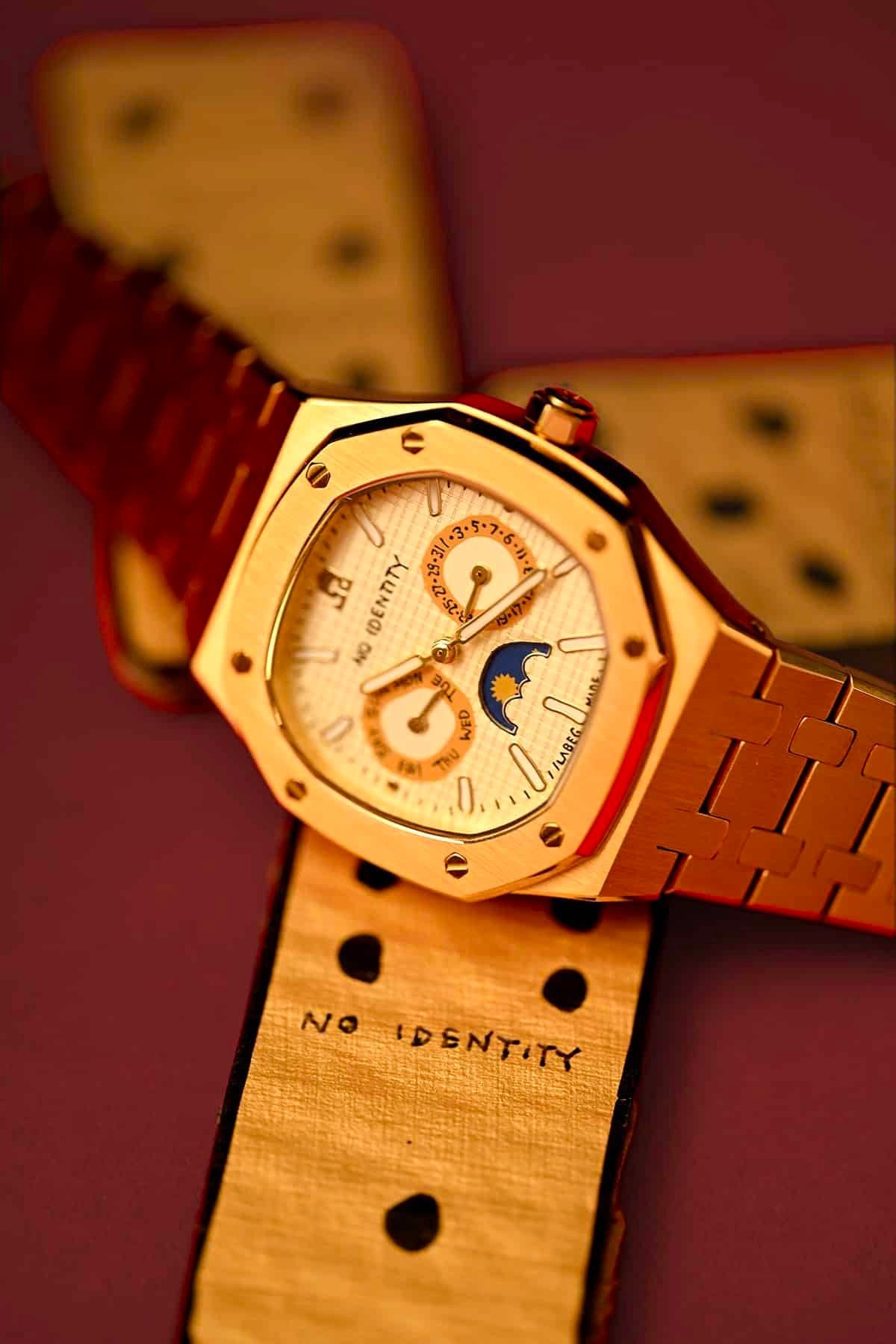
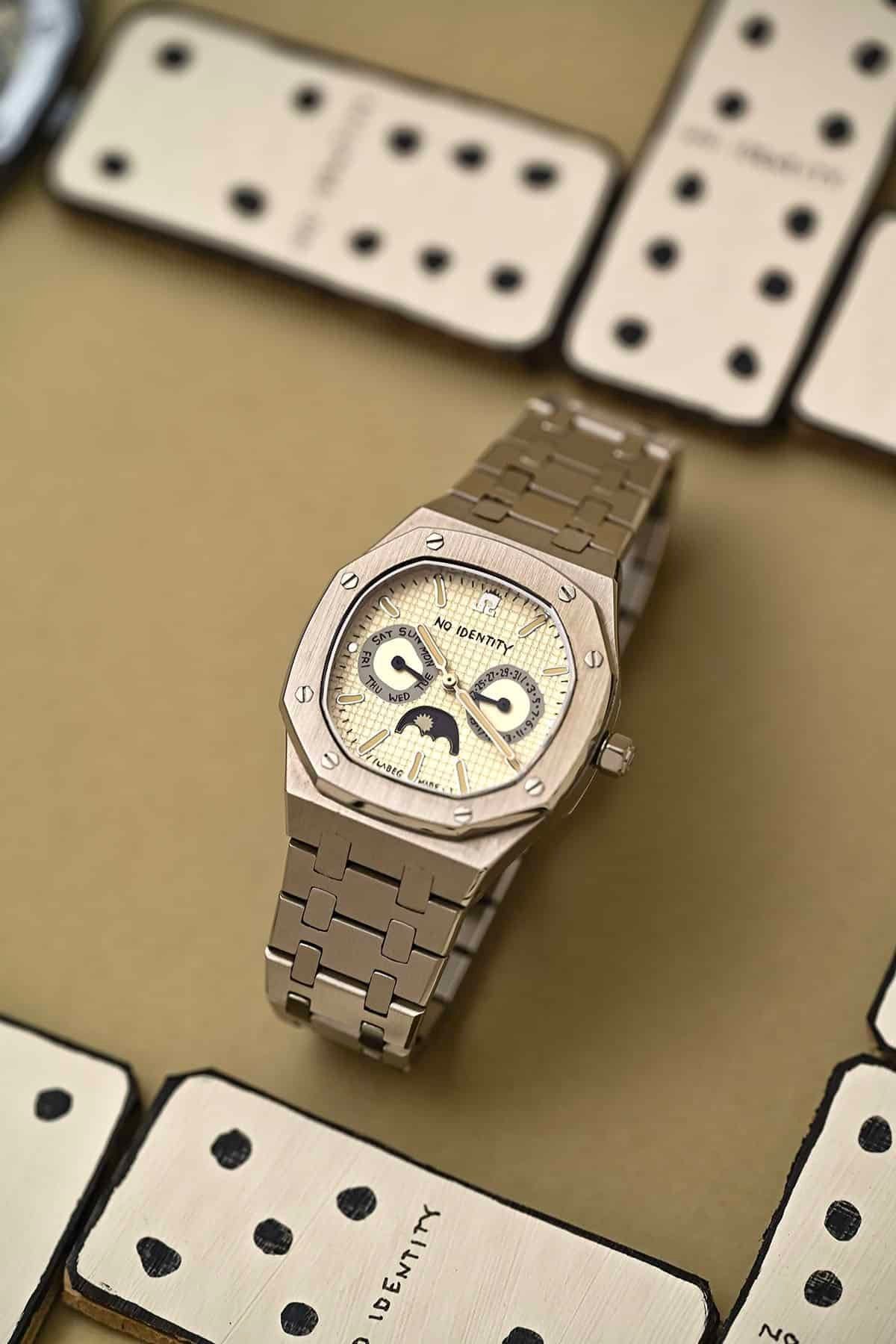
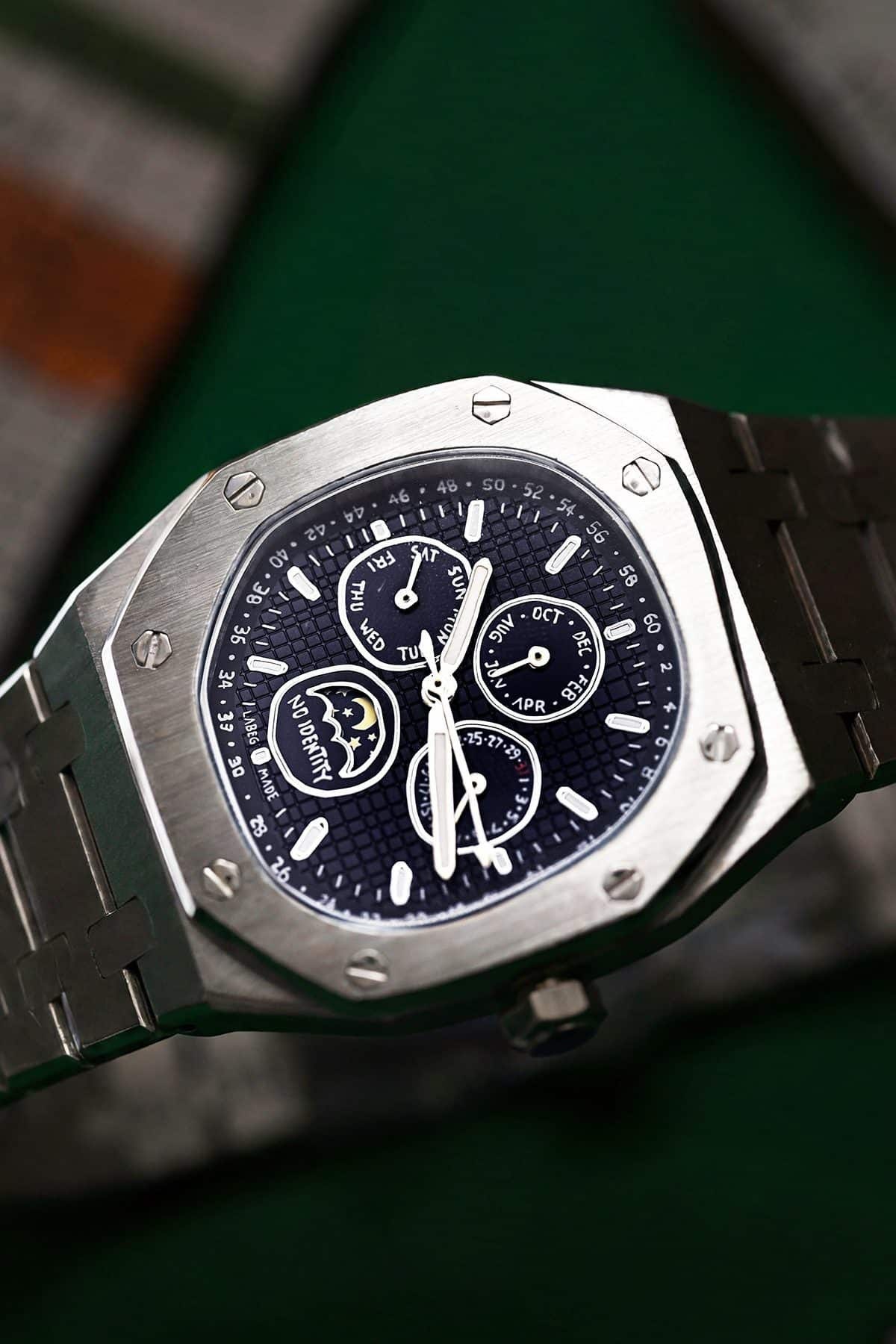
That kind of validation raises an obvious question, and eventually LABEG and NO IDENTITY’s founders asked it out loud: what happens if this style isn’t just painted onto a watch, but built into one? The brand is the answer. LABEG’s visual language — playful, geometric, unmistakably his — got translated out of flattened cardboard and into stainless steel cases with working movements and real dials. The art didn’t get diluted in the process. It got a wrist to live on.
Four Collections, and Why NO IDENTITY Matters
NO IDENTITY’s current lineup spans four families — Octonoid, Noidilus, Aquanoid, and Cuboid — each carrying LABEG’s signature dial artwork onto cases finished in stainless steel and gold tones, with prices starting at $620. That number matters more than it might first appear: it puts a genuinely art-driven watch within reach of collectors who’d otherwise need a five- or six-figure budget for something this expressive — a quiet rebuttal to a category built on gatekeeping, heritage codes, waitlists, and price tags that function as entry fees as much as valuations. A brand can start with cardboard and paint, end up in the same headlines as manufactures with centuries of history behind them, and still price its watches for under a thousand dollars. The material was never the point. The point was whether a watch could still surprise a collector who assumed they’d seen everything the category had to offer — and on that count, NO IDENTITY is just getting started.