
Most métiers d’art watches lean on the same handful of disciplines: enameling, engraving, guilloché, maybe a little gem-setting. Vacheron Constantin’s new Tribute to the Animal Kingdom throws that playbook out entirely. The six-piece collection pairs the Maison with six artisans working in crafts that have nothing to do with traditional watchmaking — featherwork, glass sculpting, origami, gold embroidery, paper sculpture, and marquetry — and asks them to shrink their entire practice down to the size of a 42mm dial. For collectors who thought they’d seen every possible take on a métiers d’art watch, this is the release that resets the bar.
Six Artisans, Zero Watchmaking Backgrounds
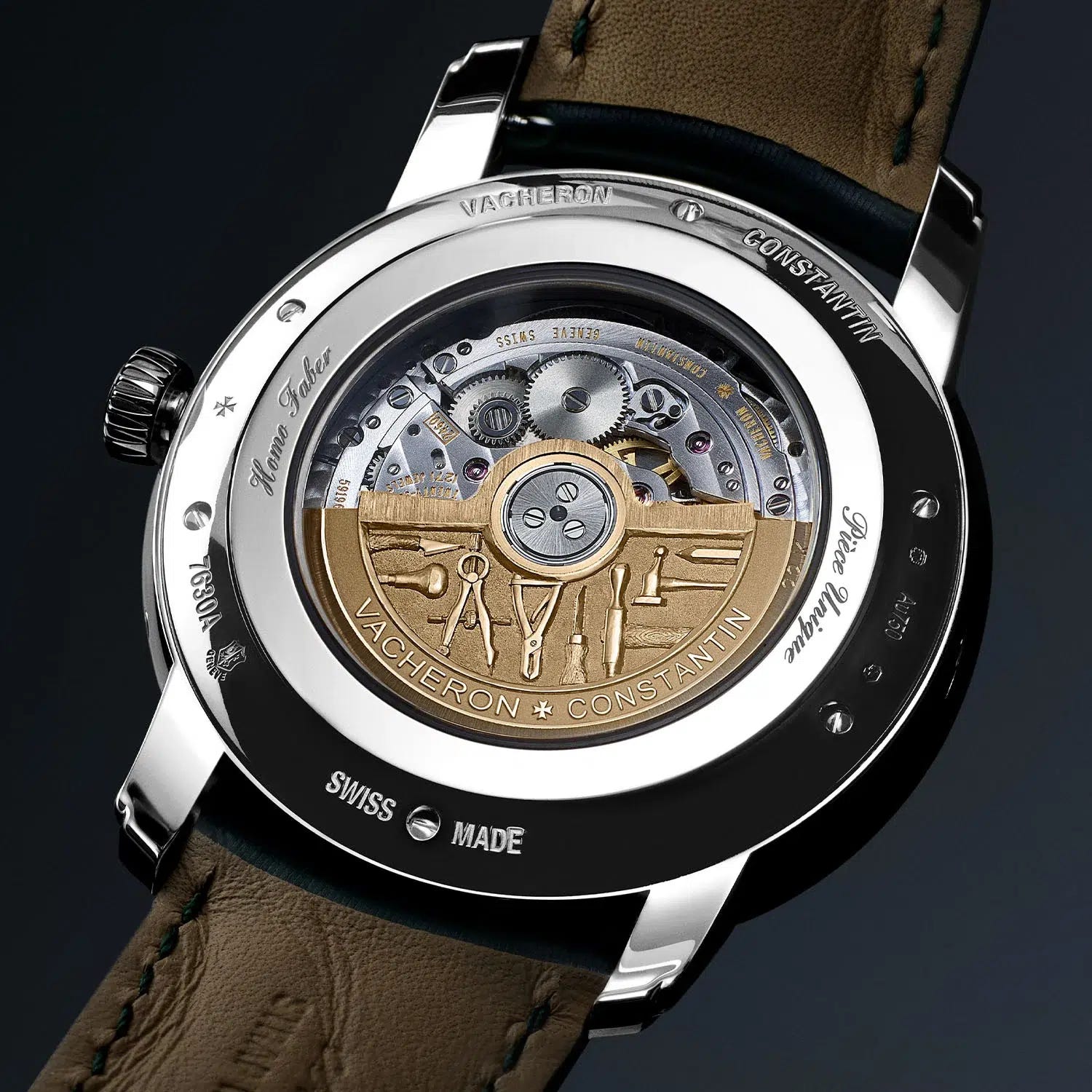
The collection sits under Vacheron Constantin’s “One of Not Many Crafts Programme,” an initiative the brand describes as a creative incubator built to support artistic disciplines that fall outside conventional métiers d’art — and to preserve the savoir-faire behind them. Every artisan involved was sourced through Homo Faber, the Venice-based celebration of fine craftsmanship, where the collection made its debut this September. None of them had previously designed for a watch dial, which is exactly the point: Vacheron wanted techniques with no watchmaking shortcuts baked in.
The Techniques: From Real Feathers to Folded Paper
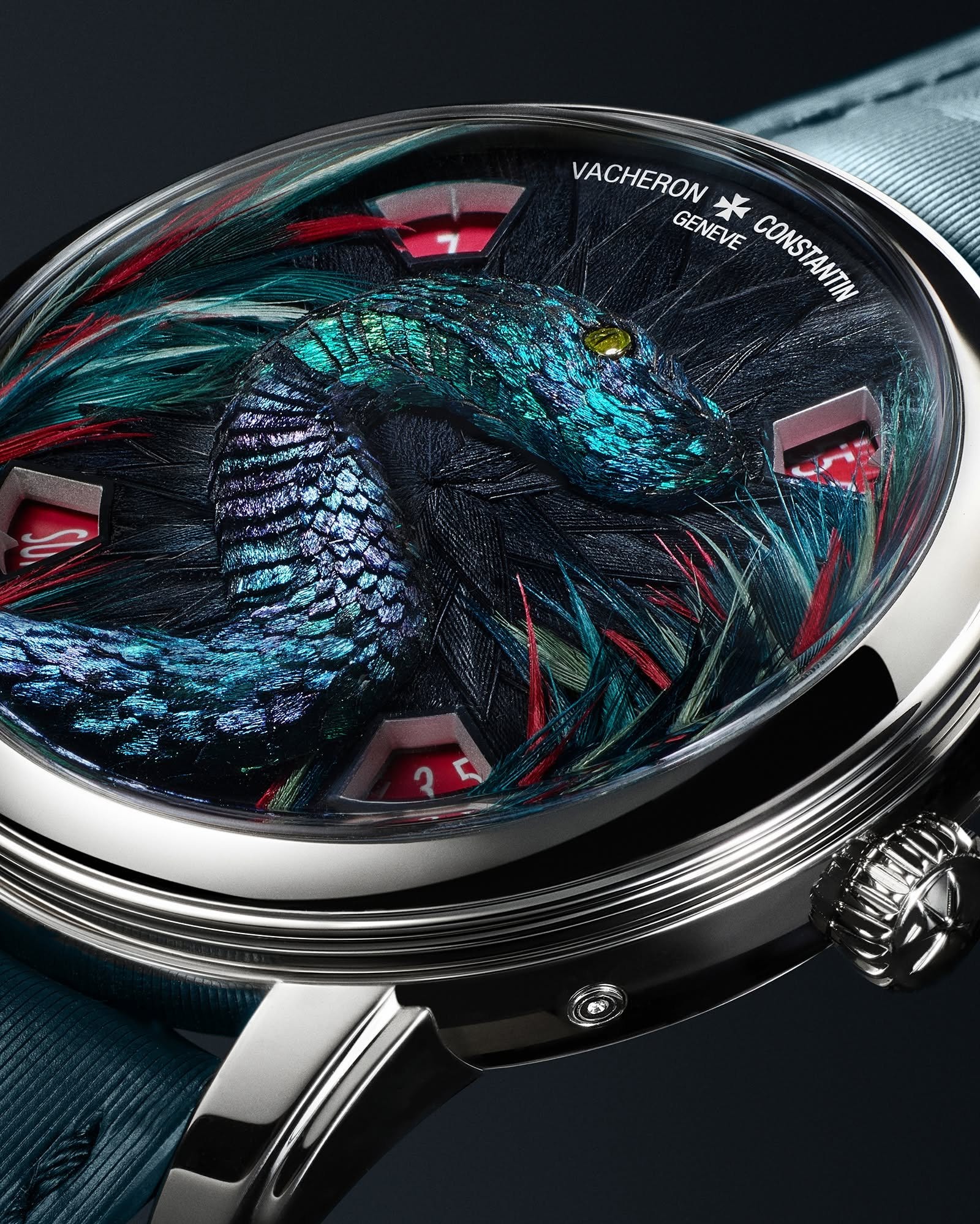
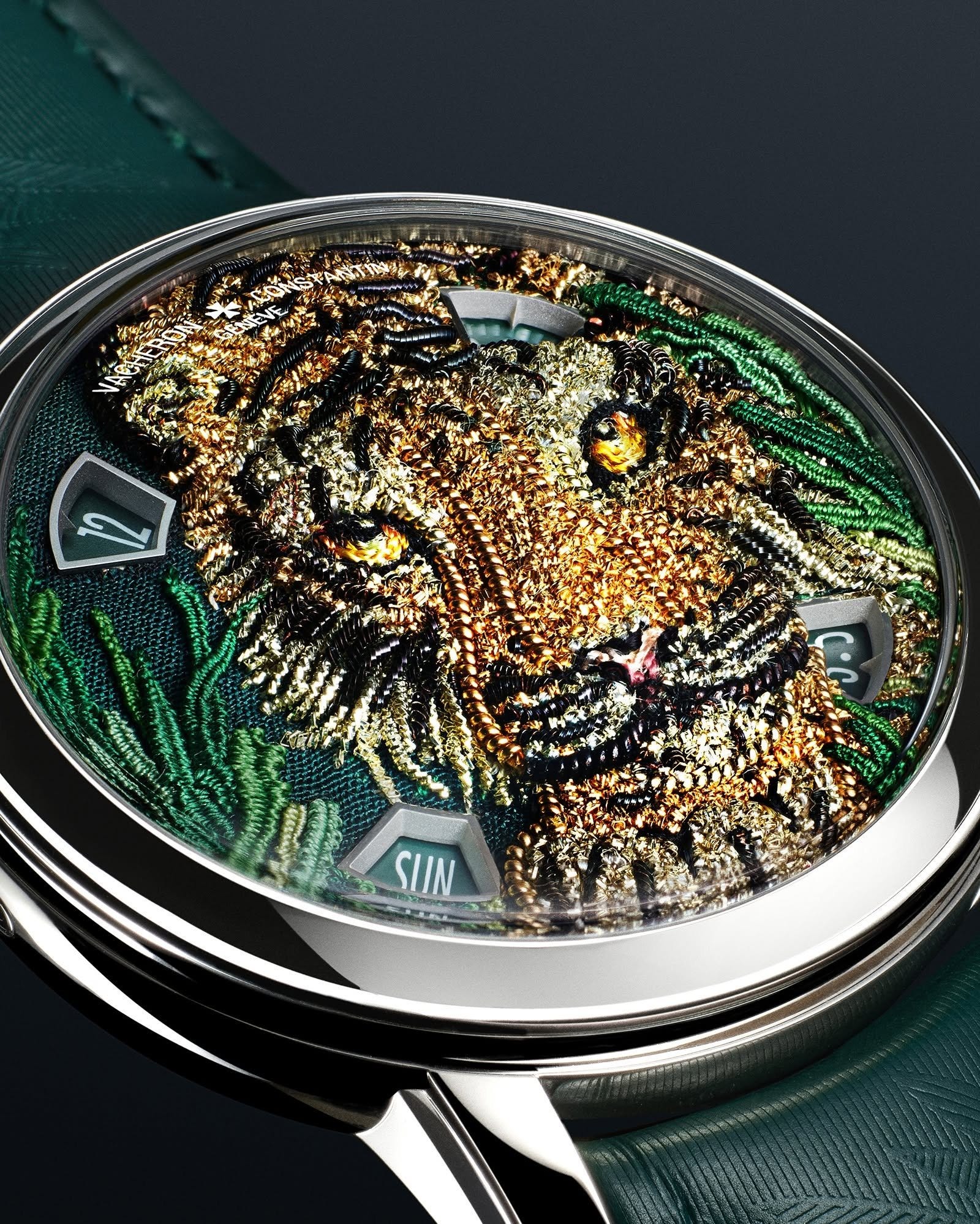
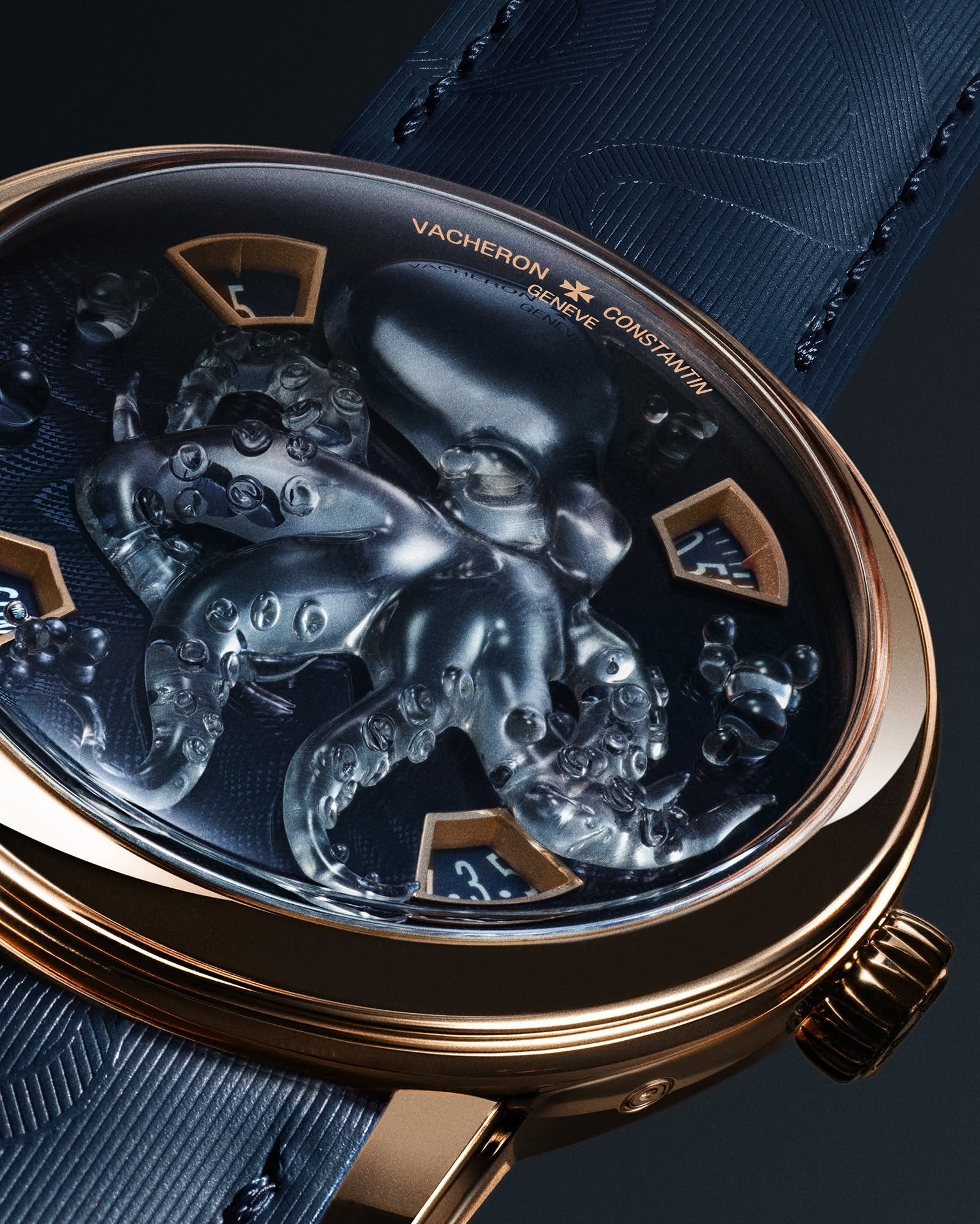
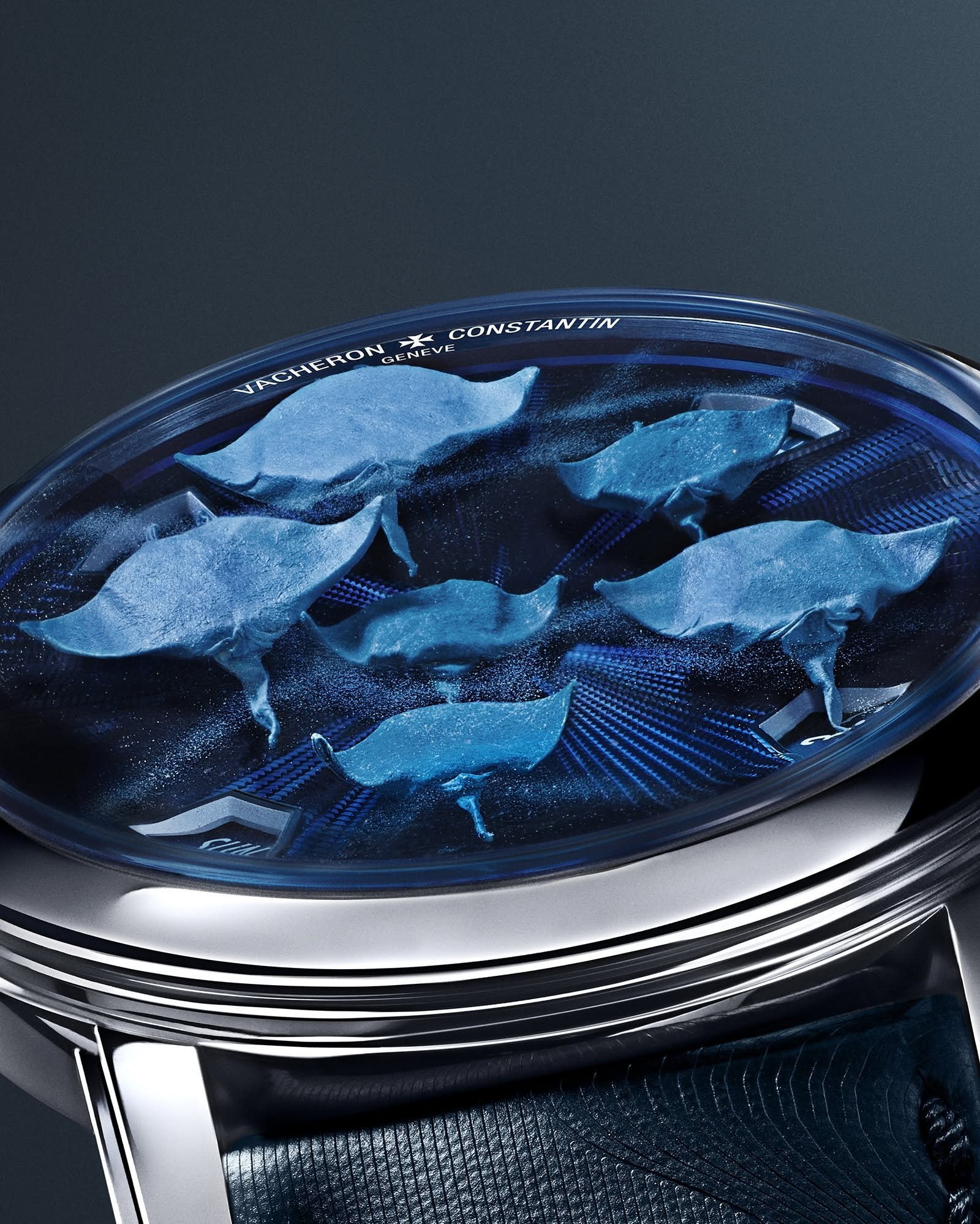
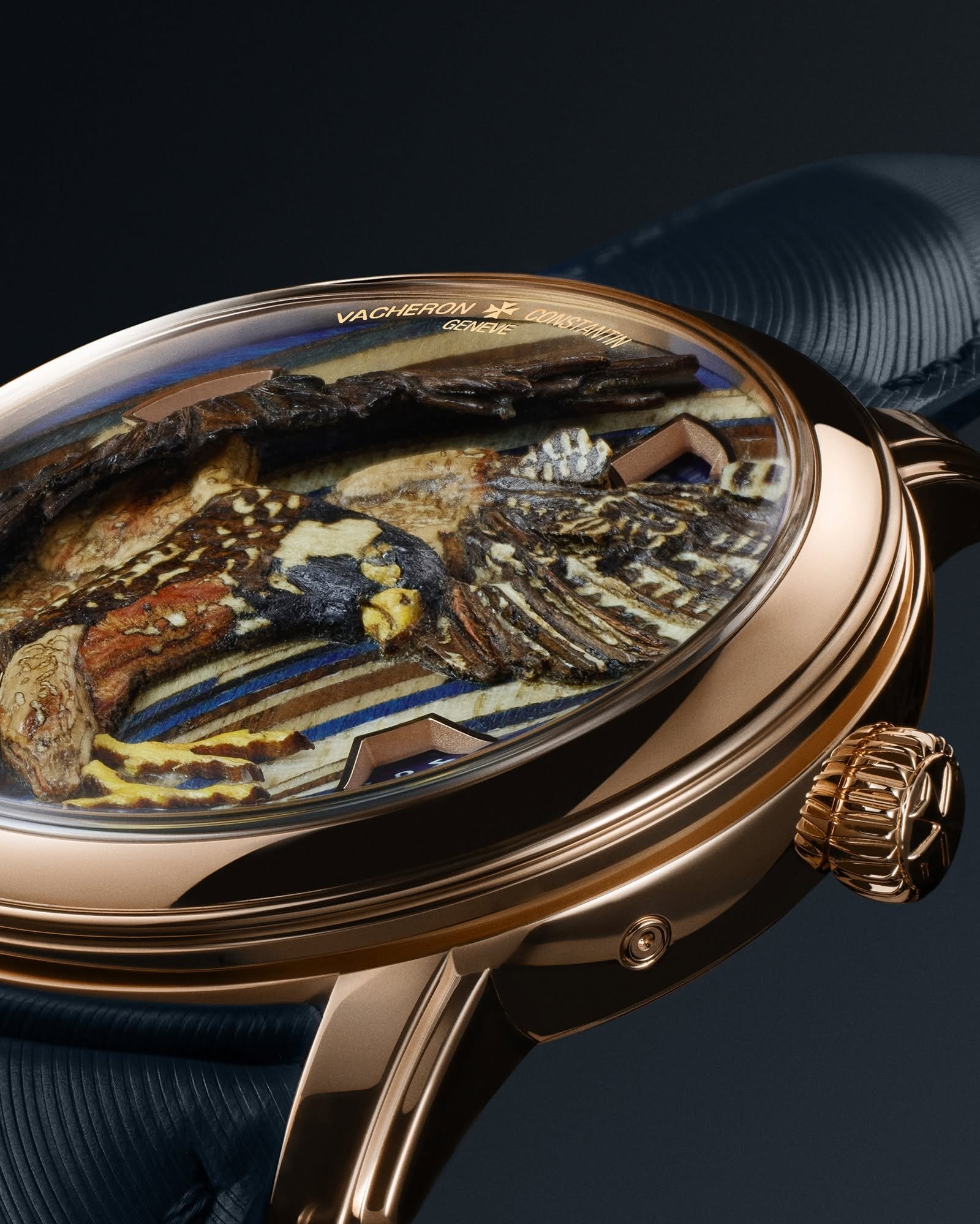
Feathersnake (Julien Vermeulen) reconstructs a serpent from roughly 200 individually cut lophophore and goose feathers, a process that reportedly took around 250 hours per dial. Glassoctopus (Simone Crestani) sculpts a transparent octopus from melted glass rods set against a guilloché background — a technique the artisan spent more than a year adapting to wristwatch scale. Oraygami (Anja Midori) folds six manta rays, each just 5 to 10mm across, from hand-dyed Japanese paper mounted on brass stems. Tigerbroidery (Laura Baverstock) stitches a tiger using 9-karat gold wire in place of thread, embroidered directly onto a perforated titanium dial. Papercroc (Marianne Guely) builds a crocodile from layered, embossed, and laser-cut cotton paper. And Woodenwings (Anna Le Corno) assembles a falcon feather by feather through marquetry, using a dozen or more species of wood.
Specs That Support the Art
Underneath all six dials sits the same architecture: a 42mm case in 18k white gold or 18k 5N pink gold, measuring 12.9mm thick, powered by the automatic Calibre 2460 G4 running at 28,800 vibrations per hour with a 40-hour power reserve. Time is told through peripheral apertures for hours, minutes, day, and date, which keeps the entire dial surface free for the artisan’s work rather than competing with hands or subdials. Water resistance sits at a modest 30 meters, a fair trade for a watch built to be looked at rather than swum in, and each piece ships on a calf leather strap embossed to echo its dial’s motif.
What This Means for Vacheron Constantin
Pricing across the collection is available on request only, with market estimates placing it well north of £50,000 per piece — numbers that put this squarely in the realm of serious collectors and institutional buyers rather than casual browsers. But the price tag isn’t really the story. By pulling in artisans from outside horology entirely, Vacheron Constantin is making a bet that the next wave of métiers d’art innovation won’t come from watchmakers reinterpreting old techniques, but from outside disciplines learning to work at four-hertz scale for the first time. If Tribute to the Animal Kingdom is any indication, that bet is paying off — and it’s hard to imagine the rest of the industry not taking notice.